

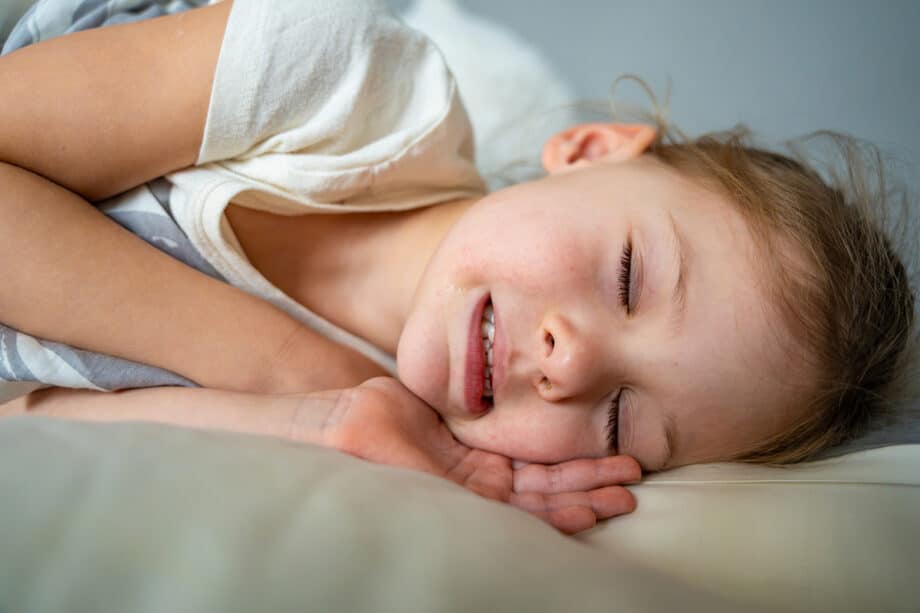
We often hear parents describe a pattern that surprises them. Their child grinds teeth at night, tosses and turns, wakes up from bad dreams, or sleeps with an open mouth. Many families think these signs mean stress, a temporary phase, or just a harmless habit. In many situations, however, nighttime grinding overlaps with sleep-disordered breathing and airway concerns.
We want parents to know that sleep reveals a lot about a child’s health. Teeth grinding, also called sleep bruxism, does not prove that a child has an airway problem. Still, research links sleep bruxism with breathing-related sleep issues in some children. When we take in the full picture—including snoring, mouth breathing, restless sleep, and daytime tiredness—we may find signs that need closer attention.
How Nightmare Grinding and Airway Issues May Connect
Sleep bruxism occurs when jaw muscles clench or grind during sleep. Experts understand it as a complex issue with many causes. Children may grind for several reasons, including sleep arousal patterns, stress, medication, tooth eruption, or airway-related sleep disruption. We remind ourselves not to base conclusions on a single symptom.
Airway issues disrupt sleep when a child cannot breathe easily through the nose and upper airway. Problems such as enlarged tonsils or adenoids, chronic nasal congestion, allergic inflammation, and certain jaw or facial growth patterns all play a role. When a child struggles for air during sleep, the brain responds with brief arousals to maintain steady airflow. Some researchers suggest that sleep bruxism happens during these arousals for some children. Grinding does not always indicate an airway issue, but the symptom warrants a careful review if other sleep concerns arise.
Signs Parents Should Watch For Beyond Teeth Grinding
Nighttime grinding rarely occurs in isolation when airway problems disrupt sleep. We encourage families to watch for a combination of signs rather than one habit. Look for snoring, noisy breathing, open-mouth breathing during sleep, dry mouth in the morning, restless sleep, night sweats, unusual sleep positions, bedwetting beyond the expected age, and frequent waking. Some children find it hard to wake up in the morning or show irritability during the day.
Daytime behavior offers more clues. Poor sleep can change attention, mood, learning, and energy. A child who acts hyperactive, unfocused, or unusually tired may not receive the restorative sleep their body needs. Headaches in the morning, dark circles under the eyes, or mouth breathing during the day can all suggest a breathing issue. We review all these signs together because one symptom rarely reveals the whole story.
Why Airway Health Matters During Growth
Healthy breathing supports healthy growth. Nasal breathing warms, filters, and humidifies the air before it reaches the lungs, and it supports normal tongue posture and balanced facial development. When a child consistently breathes through the mouth, the muscles of the face and jaws may adapt in ways that change bite development and arch shape over time.
Jaw development and airway space influence each other. For example, a narrow upper arch, crossbite, high palate, or retrusive jaw pattern may appear alongside breathing concerns in some children. Orthodontic care cannot address every cause of sleep-disordered breathing, nor does it replace medical evaluation. However, early orthodontic assessment helps us identify structural issues in the mouth and jaws that may reduce oral posture or space. If you want to explore care options, airway orthodontics may become part of a broader, team-based approach.
When To Seek an Evaluation and What That May Involve
We suggest that families schedule a professional evaluation when nighttime grinding is accompanied by snoring, chronic mouth breathing, restless sleep, frequent nightmares, or daytime symptoms such as fatigue and poor focus. Parents usually start with a pediatrician, especially when they notice enlarged tonsils, allergies, chronic congestion, or other serious sleep concerns. An orthodontist with good experience in dentofacial orthopedics and an ENT can evaluate related findings depending on the child’s symptoms.
A thorough evaluation focuses on the child’s full health picture. A medical provider reviews sleep history, breathing patterns, nasal symptoms, growth, and behavior. In some cases, the provider recommends a sleep study to check for obstructive sleep apnea or other sleep-related breathing disorders. An orthodontic evaluation looks at bite alignment, jaw development, palate shape, and oral habits. At Castle Hills 3D orthodontics, Dr. Seif collaborate with professionals to provide the best care, since many children with airway concerns benefit from multiple specialist perspectives.
Supporting Better Sleep and Breathing Habits at Home
Home care does not replace a diagnosis, but it can help support healthier sleep. Parents can keep a simple sleep log for one to two weeks, noting snoring, mouth breathing, grinding, waking, nightmares, sleep position, and morning mood. With a short phone video, families can record sleep sounds or breathing patterns to show a provider. Clear observations often help us move forward faster.
We also encourage consistent sleep routines and focus on nasal health. A regular bedtime, limits on evening screen time, and a cool, quiet sleep space can improve sleep quality. If allergies or congestion cause nasal breathing problems, families should ask a pediatrician for safe treatment options. We do not recommend over-the-counter products without medical advice, since children need age-appropriate care. The main point: healthier breathing supports better sleep, which helps children grow, feel better, and function at their best.
A Closer Look at the Next Step for Families
Nighttime grinding may seem minor, but it often gives us an early warning that sleep is less restful than it should be. We never treat grinding alone as proof of an airway disorder, but we always give it serious attention when it is accompanied by snoring, mouth breathing, restless sleep, or daytime struggles. Early attention helps families find answers before poor sleep further affects comfort, learning, and development.
We encourage parents to trust their instincts. If your child’s sleep seems noisy, restless, or strained, an evaluation can rule out serious issues and show practical next steps. Even when the cause is not airway dysfunction, the information and guidance help families stay well-informed and confident.
Frequently Asked Questions About Airway Orthodontics For Children
Can teeth grinding by itself confirm an airway problem?
No. Teeth grinding alone cannot confirm an airway problem. Children grind for different reasons, and many do not have sleep-disordered breathing. We look for patterns such as snoring, mouth breathing, restless sleep, and daytime symptoms before we suspect a broader airway concern.
What are common signs that a child may need an airway-focused evaluation?
Common signs include chronic mouth breathing, snoring, noisy sleep, restless sleep, frequent waking, dry mouth in the morning, unusual sleep positions, and daytime fatigue or poor focus. Parents may also notice bedwetting, irritability, or recurring nightmares. Dr. Seif at Castle Hills 3D Orthodontics can help to decide whether those signs point to airway issues, another sleep concern, or a different health problem.
What does airway orthodontics for children aim to assess?
Airway orthodontics for children generally looks at how jaw growth, jaw mal-alignment, palate shape and depth, bite alignment, tongue posture, and oral habits may relate to breathing and sleep. It does not replace medical testing for conditions like obstructive sleep apnea. Instead, it can help identify structural and developmental factors that may affect airflow or oral function.
Can orthodontic treatment cure sleep-disordered breathing in children?
Orthodontic treatment may help some children when jaw and dental development contribute to airway limitation, but it does not cure every sleep-disordered breathing problem. Some children also need care from an ENT, allergist, or sleep specialist. Treatment decisions should follow a full evaluation, not assumptions based on one symptom.
When should parents schedule an orthodontic consultation for airway concerns?
The sooner the better. Parents should consider a consultation when they notice grinding plus other symptoms such as snoring, mouth breathing, crowded teeth, a narrow palate, restless sleep, or daytime behavior changes linked to poor sleep. Early evaluation can help identify growth-related issues while a child is still developing. Timely care often gives families more options.
At Castle Hills 3D Orthodontics, we care for children and families who want a closer look at how oral development, breathing, and sleep work together. Dr. Seif can start treatment as early as 4 years old. We use a thoughtful, patient-centered approach to help families understand their options and support healthy growth. To learn more or schedule a visit, reach out to us.