

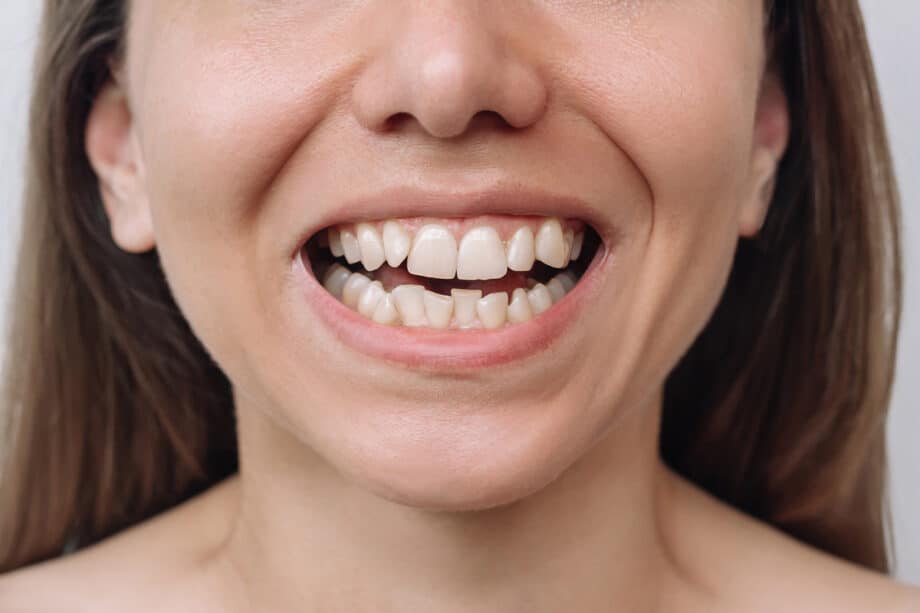
Most parents naturally focus on brushing and flossing when thinking about their child's dental health. We often overlook a fundamental physiological function that occurs roughly 20,000 times a day: breathing. The way someone breathes plays a critical role in the development of the teeth, jaw and face, as well as in the alignment of the teeth. Nasal breathing supports proper growth, but chronic mouth breathing leads to a cascade of developmental issues, often resulting in crowded or crooked teeth.
We welcome many patients seeking a straighter smile to our practice, and many do not realize how much their airway health influences their orthodontic condition. By understanding the biological link between breathing patterns and jaw growth, we treat the root cause rather than simply addressing the symptoms. When we identify these habits early, we guide facial growth more effectively and help ensure lasting dental health.
The Critical Role of Tongue Posture in Jaw Development
The tongue acts as nature’s expander for the upper jaw. When we breathe through our nose, our lips remain sealed, and the tongue rests naturally against the roof of the mouth. This upward pressure counters the inward force of the cheek muscles. We call this balanced state the "neutral zone." The tongue maintains its position in the palate, serving as a scaffold and encouraging the upper jaw to grow wide and forward. As a result, the upper jaw has enough width to accommodate all permanent teeth in their correct positions.
Disrupting the Natural Balance
Mouth breathing creates a very different mechanism. To take in air, a child or adult drops the jaw open, and the tongue lowers to the floor of the mouth so air can pass. This low tongue posture removes internal support for the upper jaw. When the tongue does not press outward, the cheek muscles push inward without resistance. Over time, this imbalance limits the growth of the maxilla (upper jaw) and produces a narrow, V-shaped arch instead of the broad U-shape we aim for in orthodontics.
The Chain Reaction of Narrow Arches
A constricted upper jaw affects more than just the appearance of the smile. It also limits the space available for erupting teeth. We often observe that patients with chronic nasal obstruction or mouth breathing habits experience significant crowding. Their teeth have no space to align correctly. Furthermore, a narrow upper jaw can trap the lower jaw in a retruded position, sometimes affecting the facial profile and putting stress on the temporomandibular joint (TMJ). When we analyze these mechanics, we understand that crooked teeth frequently signal structural deficiencies caused by poor oral posture.
How Mouth Breathing Alters Facial Structure
Mouth breathing causes changes that extend beyond the teeth and affect the entire structure of the face. Many professionals refer to a particular set of facial characteristics seen with chronic open-mouth posture as "adenoid faces" or "long face syndrome." Because someone keeps the jaw open to facilitate breathing, the face elongates vertically rather than horizontally. This vertical growth pattern can produce a gummy smile, a recessed chin, and a less-defined jawline.
Compromised Airway and Poor Sleep Quality
Mouth breathing also sets up a self-perpetuating cycle. As the jaw narrows and the face lengthens, the nasal airway can become even more restricted, prompting continued mouth breathing. This restriction often goes hand in hand with sleep-disordered breathing. We know poor sleep affects mood, behavior, focus, and overall health. When we recognize these structural signs, at Castle Hills 3D Orthodontics, Dr. Seif can intervene for both a healthier smile and improved well-being.
The Connection to Malocclusion
We identify specific bite patterns that frequently indicate airway concerns. For example, a crossbite—when the upper teeth sit inside the lower teeth—often points to a narrow upper palate. An open bite—where the front teeth do not meet when the back teeth touch—usually results from the tongue's forward thrust to keep the airway open during swallowing. These malocclusions serve as an alert to examine a patient’s breathing habits and airway health before planning orthodontic treatment.
Addressing the Root Cause Through Orthodontics
Traditional orthodontics focuses on aligning the teeth. At Castle Hills 3D Orthodontics, we approach cases using airway orthodontics, which targets both structural and behavioral contributors to malocclusion. Straightening the teeth without also correcting the breathing habit or expanding the underdeveloped jaw often leads to relapse, as the original muscle imbalances—such as cheek pressure and low tongue posture—remain.
Expansion and Airway Development
We use specialized appliances to develop the dental arches and encourage nasal breathing. For example, palatal expanders gently widen the upper jaw. With this expansion, we create space for all teeth and increase the volume of the nasal cavity, making nasal breathing physically easier. By reducing these obstructions, we help retrain patients to maintain a closed-mouth posture more consistently.
A Holistic Approach to Your Smile
By recognizing the link between breath and dental alignment, we transform our approach to orthodontic care. We see crooked teeth as potential indicators of airway compromise, not just an aesthetic issue. A beautiful smile reflects a healthy, balanced system. When we prioritize airway development and proper habits, our patients benefit from improved breathing, better sleep, enhanced focus, and well-balanced facial development. We dedicate ourselves to treating the whole person, so every smile we shape rests on a strong and lasting foundation of health.
Frequently Asked Questions About Mouth Breathing and Crooked Teeth
Can braces alone fix problems caused by mouth breathing?
Braces create straight teeth, but they do not correct the underlying skeletal narrowing, jaw mal- alignment or mouth breathing habits. If we align teeth on a narrow jaw without addressing the cause of the narrowing, the results rarely last. Crowding often returns because the muscle imbalance persists. We recommend a thorough evaluation to determine if airway-focused treatments, such as expansion, should complement braces to ensure a stable, healthy outcome.
At what age should we look for signs of mouth breathing in children?
We encourage parents to start observing their children’s breathing habits as early as possible. Signs to watch for include sleeping with the mouth open, snoring, teeth grinding, or frequent daytime mouth breathing—even in toddlers. The American Association of Orthodontists recommends an initial orthodontic screening by age seven. If you notice concerning symptoms earlier, we can assess airway health before that time. Early intervention gives us an opportunity to guide jaw growth during key developmental periods and helps prevent more severe alignment issues in the future.
At Castle Hills 3D Orthodontics, we commit to providing comprehensive, technology-driven care that goes beyond teeth to improve overall quality of life for kids, teens and adults. We serve families in Lewisville, Carrollton, The Colony, Frisco, West plano and coppell TX, and the surrounding area, offering personalized solutions for patients of all ages. If you have concerns about mouth breathing or dental development, please reach out to us to schedule a consultation.